
PLA Filament Guide: History, Properties, and Production Use Cases
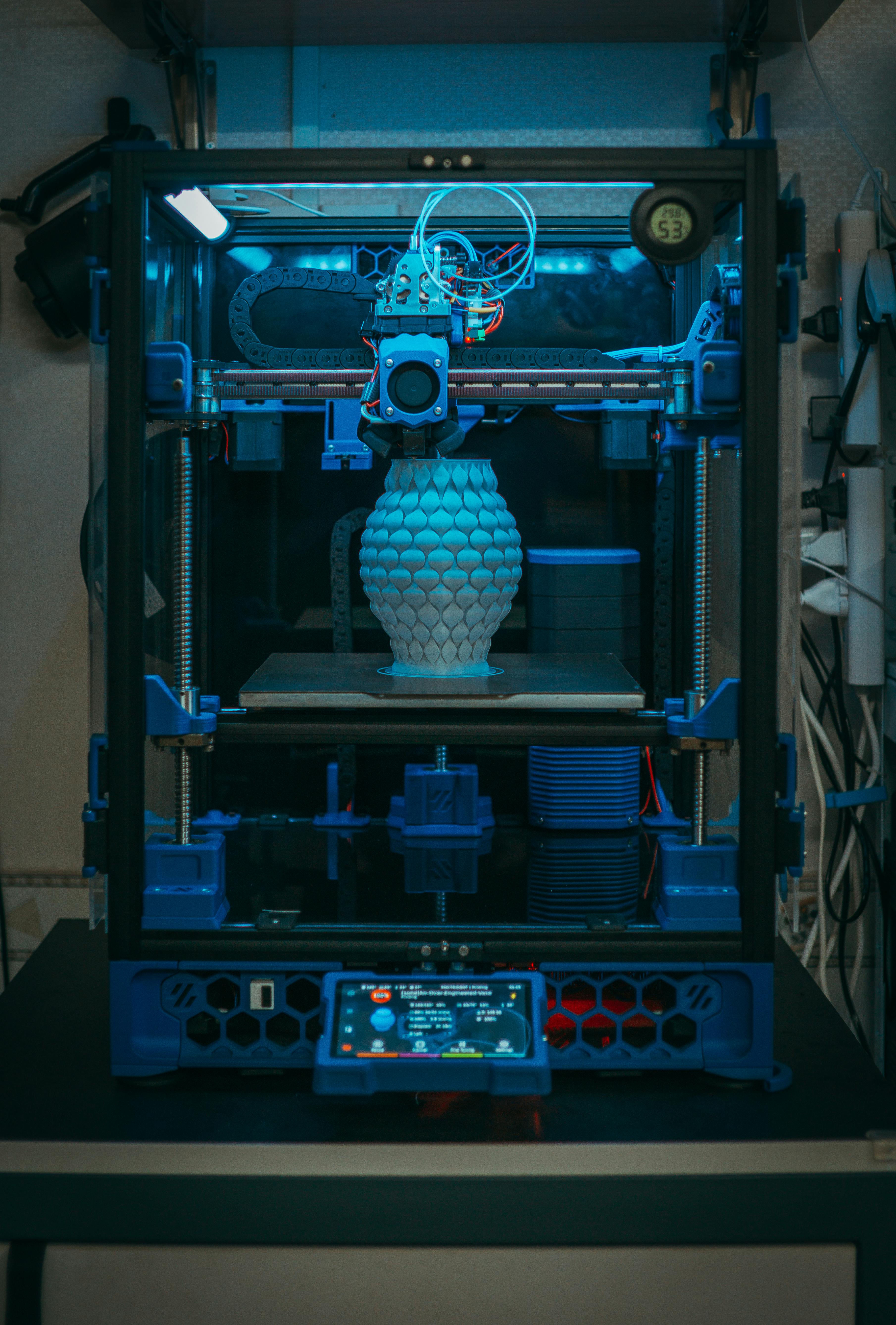
PLA Filament Guide: History, Properties, and Production Use Cases
Published: February 10, 2026
PLA filament is the default starting point for many 3D printing projects, but it is not just a beginner material. When part requirements are matched correctly, PLA is one of the most efficient options for fast prototypes, visual models, jigs, fixtures, and repeatable production batches with tight turnaround.
JCSFY is a large-scale production 3D print farm supporting production-grade 3D printing for businesses, engineers, and makers. We run material-specific workflows across 85+ machines, and we document which materials hold tolerance, finish cleanly, and scale without constant rework. If you want a deeper overview of how this works at scale, see our Large-Scale Production 3D Print Farm page.
The history of PLA: from early polymer research to modern filament
PLA stands for polylactic acid, a polyester made from lactic acid feedstocks that can be derived from renewable sources such as fermented plant sugars. The material history is important because it explains why PLA became both a consumer filament and an industrial biopolymer.
- Early 1930s: PLA chemistry appears in early polymer research, but process economics and molecular-weight limits prevent broad manufacturing adoption.
- Late 20th century: Better polymerization routes and interest in bio-based plastics push PLA back into serious development work.
- Early 2000s: Large-scale commercialization accelerates as resin producers launch industrial PLA grades for packaging and consumer products. Companies such as NatureWorks helped make PLA available at scale.
- 2010s onward: Desktop FDM/FFF printing adopts PLA rapidly because it prints at lower temperatures, warps less than many alternatives, and gives clean visual results.
Today, PLA sits at the intersection of accessible printing and production reliability. Market tracking from groups such as European Bioplastics also reflects the broader growth of bio-based polymer demand.
Why PLA remains a core material in production workflows
In a production environment, the best material is not the one with the highest spec sheet value. It is the one that meets the real requirement with repeatable quality and stable throughput. PLA keeps winning jobs because it is practical.
- Fast print cycles: PLA usually supports strong print speed without excessive tuning.
- Dimensional stability: Lower shrink and lower warp risk make repeatability easier on large batches.
- Surface quality: Clean cosmetic finish is achievable without aggressive post-processing.
- Cost control: Wide availability and consistent supply keep material cost predictable.
- Lower thermal stress on equipment: Print temperatures are moderate compared with many engineering polymers.
For buyers planning repeat orders, PLA is often the shortest path to predictable lead times. That is why we connect material decisions to scheduling and queue strategy in our print farm management tips and automation pillar.
PLA tradeoffs you should evaluate before committing
PLA is not universal. It performs best when you design around its limits.
- Heat resistance: Standard PLA can soften in hot environments, especially enclosed cars or high-heat machinery spaces.
- Impact behavior: Some PLA grades are stiff but brittle relative to tougher options.
- Long-term outdoor use: UV and thermal cycling can reduce life for exposed parts.
- Functional load cases: High stress, snap fits, and repeated flexing may need a tougher polymer family.
When customers bring production files, we usually map each part to one of three classes: cosmetic, light functional, or high-stress functional. PLA works extremely well in the first two classes if temperatures stay controlled.
Common PLA variants and what they are good for
Not all PLA is the same. Material naming can be inconsistent between brands, so we test each SKU in production conditions before approving it for long runs.
- Standard PLA: best baseline for prototypes, display parts, and general fixtures.
- PLA+ / tough PLA: improved toughness and layer adhesion for parts that see light handling stress.
- Matte PLA: better visual finish hiding layer lines, usually with some reduction in strength.
- Silk PLA: cosmetic shine for presentation pieces; not usually selected for structural loads.
- Filled PLA (CF, wood, metal-effect): specialized appearance or stiffness with nozzle wear considerations.
- Heat-treatable PLA grades: certain blends can improve heat resistance after controlled annealing.
For scaled output, variant control matters more than marketing labels. We lock approved SKUs, drying rules, and machine profiles so repeat orders do not drift over time.
Production settings that make PLA repeatable
Exact settings depend on machine, nozzle, and brand, but the production principle is always the same: define a stable process window, then protect it.
- Nozzle temperature: tune for consistent extrusion and layer bonding without gloss variation or stringing spikes.
- Bed temperature: keep first-layer adhesion stable while avoiding elephant-foot growth.
- Part cooling: use enough airflow for geometry control, but balance for interlayer strength on thicker walls.
- Moisture control: dry and store filament to prevent bubbles, brittle behavior, and rough surfaces.
- QC checkpoints: verify dimensions, threads, and mating features on first-article prints before full batch release.
Our rule is simple: if it cannot hold tolerance and finish for multiple days in a row, it is not production-ready yet. We document inspection gates in our quality control inspection standards pillar so customers know exactly how consistency is protected.
When PLA is the right call for high-volume output
PLA is often the right material when your project needs quick lead times, reliable appearance, and moderate functional performance. This includes assembly aids, packaging inserts, branded accessories, visual mockups, and many short- to medium-duty end-use parts.
For larger order planning, capacity and workflow matter as much as material selection. Our high-volume 3D printing services in the United States pillar explains how we move from pilot quantities to repeat production without losing control of quality or timeline.
When to move beyond PLA
If the part must survive sustained heat, UV exposure, fuel/oil contact, repeated impact, or heavy mechanical loading, we typically evaluate other filaments. The right decision is requirement-driven, not trend-driven. We would rather move you to a tougher polymer early than ship parts that fail in the field.
Need help deciding if PLA fits your part?
If you are unsure whether PLA is the right material for your geometry and use case, send us your files and target requirements through our intake form. We will recommend a practical material path for prototype and production quantities.
If you want quick budget guidance first, you can also get an instant quote.