

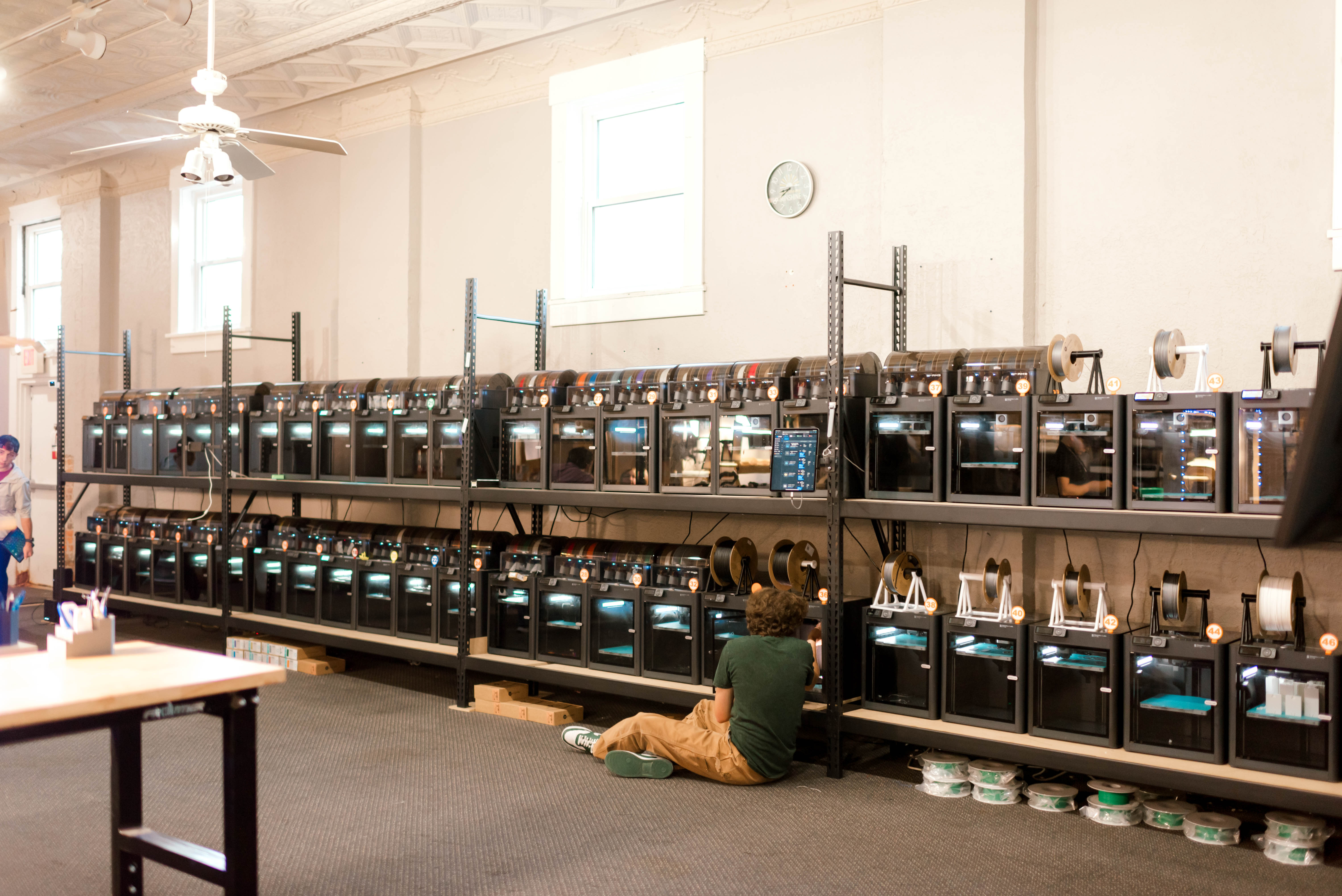
Repeat-Order 3D Printing for Recurring Bulk and Batch Production
If a released repeat-production order must be paused, deferred, reduced, or canceled, issue a written stop boundary and reconcile every affected SKU and revision by physical state before changing the open balance. Separate unstarted quantity, active WIP, completed parts, packed units, dedicated material, labels, packaging, and buyer property; then approve ship, finish, hold, transfer, return, rework, or disposal for each bucket. A pause preserves a possible controlled restart, while a cancellation closes the named balance only after disposition and reconciliation. Commercial responsibility remains project-specific under the accepted quote, purchase order, and change terms.
Choose the right quote path
Contacting the print farm is for multi-SKU, recurring, inspection-sensitive, staged, packaged, or otherwise complex work; instant quote is for clean files and straightforward requirements.
What is the difference between a forecast and a released order?
| Planning input | What it communicates | What it does not do |
|---|---|---|
| Forecast | Expected demand by week or month, likely SKU mix, and possible peaks or slowdowns. | It should not be treated as final authorization to print, pack, or ship. |
| Firm release | Authorized quantity, governing revision, required destination or pack-out, and requested timing. | It does not silently approve a new file, substitute material, or changed acceptance criteria. |
| Change notice | A proposed revision, material, color, labeling, packaging, or inspection change and its effective release. | It should not enter active production until the disposition and cutoff are clear. |
A forecast is useful because it lets the supplier evaluate material continuity, machine loading, inspection labor, packaging supplies, and recovery room before demand becomes urgent. Forecasts should be refreshed when the mix or timing changes. The quote and schedule still depend on the firm requirements released for production.
The repeat-order baseline buyers should lock
A recurring program becomes easier to manage when every release points back to the same approved production record. That record should include:
- Part identity: part number, SKU, file name, and revision with superseded files removed from use.
- Material requirements: material family, grade when important, color, and any approved alternate.
- Production requirements: orientation-sensitive surfaces, hardware, inserts, support-removal expectations, and other secondary work.
- Acceptance requirements: critical dimensions, functional checks, cosmetic boundaries, inspection frequency, and required records.
- Pack-out: quantity per bag, kit, or carton; label fields; revision segregation; and destination rules.
- Release authority: who can approve a first article, authorize a change, place a hold, or release a shipment.
Buyers defining a new baseline can use the production quote handoff checklist. For inspection-sensitive parts, align it with the production quality-control guide.
Blanket purchase orders and scheduled releases for repeat 3D printed parts
Yes, a buyer can plan a larger program and authorize smaller weekly or monthly releases, but the documents must separate the planning ceiling from permission to produce. Define the covered SKUs and revisions, forecast, committed quantity if any, firm-release format, release horizon, material or capacity assumptions, shipment unit, change authority, cancellation treatment, and open-balance reconciliation before the first release. Those commercial terms are project-specific and must be quoted and accepted; this page does not promise that every blanket order will use the same terms.
Use four separate records instead of one ambiguous total
| Record | What the buyer should state | What it controls |
|---|---|---|
| Blanket order or program agreement | Covered SKUs, governing requirements, date range, planning ceiling or committed quantity, pricing assumptions, and agreed change or cancellation treatment. | The commercial and operational frame. It does not automatically authorize every forecasted unit to be printed. |
| Rolling forecast | Expected quantity by SKU and period, confidence level, likely peaks, and updates. | Planning for material, machine time, inspection, packaging, and labor. It is not a firm release unless the accepted terms explicitly say otherwise. |
| Firm release | Release number, SKU, revision, authorized quantity, ship window, pack unit, destination, and required records. | The specific work authorized to enter production, inspection, packing, and shipment. |
| Release ledger | Released, accepted, rejected, reprinted, shipped, held, canceled, and open quantities by SKU and revision. | Prevents the blanket total, produced total, and remaining balance from drifting apart. |
Define the firm-release horizon
A release horizon is the point at which a forecasted period becomes firm enough to schedule. It should be based on the actual file set, material availability, machine time, inspection workload, packaging, destinations, and existing commitments. There is no universal weekly or monthly cutoff that fits every part.
For each period, label demand as forecast, pending approval, or firm. If a release arrives inside the agreed planning window or changes the SKU mix, treat the timing as a new scheduling question rather than assuming the prior forecast guaranteed capacity. The production lead-time guide explains why total machine hours alone do not determine a reliable ship plan.
Decide what material or capacity reservation means
Buyers sometimes want continuity without authorizing the whole annual scenario. State exactly what is being reserved and what obligation supports it. A supplier might be asked to evaluate raw-material purchasing, color-lot continuity, packaging stock, inspection time, or a production lane, but none should be assumed free, exclusive, or guaranteed unless the accepted quote says so.
- Material: identify grade, color, allowed alternates, lot-consistency expectations, ownership, storage duration, and disposition if demand changes.
- Capacity: identify the forecast window, firm-release deadline, prioritized SKUs, and what happens when the mix or quantity changes.
- Finished inventory: identify who owns it, where it is held, how releases consume it, and what happens after a revision change.
- Packaging and supplied hardware: define purchasing authority, replenishment triggers, and treatment of unused stock.
Make every scheduled release production-ready
Do not send only a purchase-order line and a requested date. A clean release should reference the approved baseline and contain enough information to prevent the supplier from guessing.
- blanket-order or program reference and a unique release number;
- part number or SKU, governing file and drawing revision, and quantity by SKU;
- material, color, and any explicitly approved substitution;
- requested ship window and the smallest partial shipment that is actually useful;
- inspection, first-article, certificate, count, or hold-point requirements;
- bag, kit, carton, label, destination, and split-shipment instructions;
- a written statement of changes from the baseline, including “no change” when applicable;
- the person authorized to answer release, revision, and disposition questions.
Use the production quote checklist to build the baseline, then carry its controlled fields into each release.
Control revision changes between releases
A new revision should have an effective release, not merely a new file attached to an email. Identify which unreleased, active, completed, and finished-inventory quantities remain acceptable. Quarantine superseded files, state whether a new first article is required, and decide whether old and new revisions may share a shipment. The production quality-control guide covers release authority and revision containment in more detail.
If the change affects material, inspection, secondary operations, packaging, or cycle time, the supplier may need to revise the quote or schedule. A blanket order should not be treated as permanent approval of requirements that have changed.
Agree on cancellation, reschedule, and superseded-quantity treatment
Separate forecast reductions from changes to already authorized work. Before the program starts, decide how the parties will identify and disposition unstarted released quantity, work in process, accepted finished parts, purchased material, dedicated labels or packaging, and customer-supplied items. The accepted commercial documents—not a generic industry rule—should govern charges, ownership, returns, storage, rework, or disposal.
When a release moves, preserve its number and status in the ledger. Do not erase the original instruction and create an unexplained gap between the purchase-order balance and physical inventory.
Example release scenarios
These are planning patterns, not JCPRINTFARM capacity or commercial commitments.
| Scenario | Useful structure | Main risk to control |
|---|---|---|
| Stable single SKU | Rolling forecast, one approved baseline, repeated firm releases, and periodic balance reconciliation. | A design or material change entering a release without an effective-date decision. |
| High-mix program | Forecast and release quantity by SKU and revision, priority ranking, shared-material assumptions, and kit or carton rules. | An aggregate total hiding the machine, inspection, label, or destination needs of individual SKUs. |
| Inspection-sensitive part | Firm releases with named hold points, sample or every-part checks, acceptance records, and shipment authorization. | Producing later releases before the prior release reveals a repeatability or acceptance problem. |
| Variable demand | Forecast confidence bands, a defined firm horizon, minimum useful partial shipments, and written reschedule treatment. | Treating a forecast peak as guaranteed work or treating a forecast drop as cancellation of authorized work. |
Blanket order and scheduled release FAQ
Does a blanket purchase order reserve print-farm capacity?
Only if the accepted quote or agreement explicitly defines what is reserved, for which period and requirements, and what buyer commitment supports it. A forecast or planning ceiling alone should not be read as a capacity guarantee.
Can releases ship every week or month?
They can be planned on a weekly, monthly, or other useful cadence after the supplier reviews the files, quantity by SKU, material, inspection, packaging, and delivery requirements. Each firm release still needs an achievable schedule.
Is the entire blanket quantity committed?
That depends on the accepted commercial terms. State whether the number is a nonbinding forecast, a maximum ordering ceiling, a minimum commitment, or another defined quantity. Do not use one unlabeled total for all four meanings.
What happens to material purchased for future releases?
Ownership, storage, substitutions, shelf or condition controls, and disposition after a cancellation or revision should be agreed before purchasing. The answer is project-specific.
How often should the open balance be reconciled?
Reconcile at each release or shipment boundary when possible, and always after a cancellation, revision change, rejection, reprint, or inventory transfer. Report by SKU and revision rather than only one grand total.
How far ahead should recurring demand be communicated?
Communicate it as soon as the demand signal is useful, then distinguish confidence from authorization. There is no universal number of days that fits every recurring order. Useful notice depends on material availability, quantity and SKU mix, machine time, inspection effort, packaging, existing commitments, and whether the requested shipment can be staged.
Use a rolling planning view
Share expected demand across several future periods, identify the nearest firm release, and label later quantities as forecast. Update the view when demand changes instead of allowing an old forecast to become an accidental commitment.
Define the minimum useful shipment
If a complete monthly quantity is not required at once, state what partial quantity keeps assembly, installation, or inventory moving. That gives the supplier a meaningful way to propose staged releases without inventing an arbitrary batch size.
Plan for material and packaging continuity
Recurring production can expose color-lot, substitute-material, label-stock, carton, and hardware availability issues that do not appear in a prototype. Name which substitutions require buyer approval and what evidence is needed before a change enters a released order.
When does a repeat order need a new first article?
A new first article is appropriate when a change could alter fit, function, appearance, inspection results, or receiving. Common triggers include:
- a CAD or drawing revision;
- a material grade, supplier, color, or approved-alternate change that matters to the requirement;
- a changed build orientation or production process that affects important surfaces or dimensions;
- new hardware, post-processing, labels, kits, or packaging;
- a long production pause when the buyer requires the baseline to be reconfirmed;
- a recurring defect or corrective action that changes the controlled method.
Do not rely on “same as last time” when a controlled field changed. The change notice should identify the first release affected, the approval evidence required, and how old and new revisions will be separated.
How to adjust cadence when demand rises or falls
When demand rises
Prioritize SKUs, confirm the earliest useful partial release, and identify which requirements are fixed. Adding quantity can change plate planning, material purchasing, inspection workload, packaging labor, and recovery margin, so the supplier should re-evaluate the schedule before the increase becomes a firm promise.
When demand falls
Update the forecast promptly and distinguish unstarted quantities from released work. Decide whether finished accepted inventory should ship, be held, or be allocated to a later release. Do not assume that a lower forecast automatically cancels an authorized release.
When the SKU mix changes
Provide quantity by SKU and revision, not only one aggregate total. High-mix work may require separate material lanes, inspections, labels, and pack units even when the parts share a delivery date.
Should repeat 3D printed parts use safety stock or digital inventory?
Keep finished safety stock when a stockout has a serious operational consequence and demand is variable enough that the normal replenishment path may not respond in time. Use digital inventory—a controlled file and release package without finished stock—when revisions change often, demand is intermittent, or storage would create more risk than it removes. A hybrid can reserve approved material, packaging, or a production plan while holding only a small physical buffer. The right choice depends on demand variability, replenishment time, minimum useful shipment, revision exposure, storage, material availability, and the consequence of downtime; no universal stock quantity fits every part.
Compare the three buffer strategies
| Strategy | Best fit | Main controls | Main exposure |
|---|---|---|---|
| Finished safety stock | Stable revision, recurring consumption, costly stockout, and acceptable storage conditions. | Ownership, location, count, lot and revision identity, reorder trigger, inspection status, and disposition. | Obsolescence, storage damage, mixed revisions, and cash tied to inventory. |
| Digital inventory | Intermittent demand, many legacy SKUs, uncertain usage, or frequent engineering changes. | Released file, drawing, material, inspection plan, pack-out, supplier readiness, and a quote or schedule refresh rule. | A file alone does not reserve material, capacity, or a delivery date. |
| Hybrid readiness | Moderate stockout risk where a small physical buffer plus planned replenishment is useful. | Finished minimum, approved material or hardware, replenishment release, forecast, and review cadence. | Ambiguous reservations or supplier-held items that lack ownership and disposition terms. |
Start with the consequence of a stockout
Ask what actually happens when the available count reaches zero. A line-stopping replacement part, an assembly component needed for a committed shipment, and a convenience accessory should not use the same buffer logic. Describe the operational consequence, the smallest quantity that restores useful operation, and whether a partial shipment helps.
Then compare that consequence with the full replenishment path: release approval, material availability, printing, cooling, post-processing, inspection, counting, packaging, and transit. The production lead-time guide explains why printer hours alone are not a complete replenishment time.
Use demand and replenishment evidence without inventing a stock level
Review actual consumption by period, demand spikes, forecast error, supplier release history, rejected or quarantined quantities, and replenishment variation. Separate normal usage from exceptional events. A planning scenario can compare what happens if demand arrives earlier than expected or replenishment takes longer, but it should not be presented as a guaranteed service level.
- Demand variability: Are releases stable, seasonal, event-driven, or tied to unpredictable equipment failures?
- Replenishment variability: Which steps can move—material, machine lane, inspection, pack-out, or transit?
- Minimum useful shipment: How many accepted parts restore production or cover the next real release?
- Recovery options: Can the buyer substitute another revision, repair an assembly, stage a partial release, or prioritize one SKU?
Control ownership and counts for supplier-held stock
If finished parts, raw material, hardware, labels, or packaging are held at the supplier, the accepted commercial documents should say who owns each item, when ownership transfers, where it is stored, and who bears agreed storage or disposition responsibilities. Do not describe supplier-held inventory as “available†without a count and status.
Use a ledger by part number, revision, and status: accepted and available, allocated to a firm release, on hold, rejected, shipped, returned, or obsolete. Define who may consume the buffer and whether a shipment automatically triggers replenishment. Reconcile after every release, count adjustment, rejection, reprint, revision change, or transfer.
Protect the buffer from revision and storage risk
Before printing ahead, estimate how likely the design, material, color, inspection rule, hardware, label, or packaging will change during the proposed holding period. Name which existing units remain acceptable after a change and who approves their use, rework, relabeling, return, or disposal. Never mix old and new revisions merely to preserve a target inventory count.
Also document storage conditions that could affect identification, dimensions, appearance, cleanliness, hardware, adhesive, or packaging. Use first-in/first-out only when it is compatible with revision and lot controls; the oldest part is not automatically the correct part to ship.
What digital inventory must contain
Digital inventory is more than an STL in a folder. Keep a controlled production packet with the part number, released revision, source and export files as appropriate, material and allowed substitutions, orientation-sensitive features, critical dimensions or functional checks, cosmetic criteria, hardware, labels, packaging, destination rules, and approval authority.
Identify what must be reconfirmed before each release: quote, material availability, production schedule, first article, inspection plan, or shipping requirements. For low-frequency spares, the legacy replacement-parts guide covers the deeper digital-spares use case. Build the controlled handoff with the production quote checklist.
Set replenishment and review triggers
A trigger should produce a named action, not an automatic assumption that production can start. Useful trigger types include:
- Count trigger: available accepted inventory reaches a documented review point.
- Consumption trigger: a firm release, shipment, installation, or scrap event consumes part of the buffer.
- Time trigger: forecast, material status, storage condition, and open releases receive a scheduled review.
- Change trigger: a new revision, material, inspection, packaging, destination, or supplier lane forces disposition and possible reapproval.
- Risk trigger: demand, replenishment, equipment downtime consequence, or supplier readiness changes materially.
The review should decide whether to replenish, hold, reduce, convert to digital-only readiness, or requalify the baseline. It should also identify who can issue the firm production release.
Safety-stock decision checklist
- operational consequence and recovery option if stock reaches zero;
- usage pattern and variability by SKU;
- end-to-end replenishment steps and uncertainty;
- minimum useful partial shipment;
- revision stability and expected engineering-change frequency;
- material, hardware, label, and packaging availability;
- storage, identification, inspection, and shelf or condition concerns;
- owner, location, count method, and status ledger;
- replenishment authority, trigger, and review cadence;
- disposition plan for obsolete, held, damaged, or superseded inventory.
Safety stock and digital inventory FAQ
Does a digital file guarantee rapid replenishment?
No. It removes the need to recreate the design handoff, but material, capacity, inspection, packaging, approvals, and transit still need to be confirmed for the release.
Who owns parts held at the print farm?
Ownership and transfer timing are project-specific commercial terms. Put them in the accepted quote, purchase order, or program agreement along with counting, storage, allocation, and disposition rules.
What happens to safety stock after a revision change?
Place affected inventory on hold, identify it by SKU and revision, and obtain a written disposition. The buyer may approve continued use, rework, relabeling, return, or disposal; do not assume old stock remains acceptable.
Can approved material be reserved instead of finished parts?
It can be evaluated as a hybrid strategy, but the agreement must identify the material, quantity, ownership, storage, allowed uses, substitutions, review date, and disposition if demand or revision changes. Material readiness is not the same as finished-part availability.
How often should the buffer be reviewed?
Use a cadence that matches demand and risk, plus event-driven reviews after a release, count discrepancy, rejection, revision, material change, or material shift in replenishment conditions.
What happens when a released 3D printing order is paused or canceled?
Issue a written stop instruction, establish the last authorized production point, and reconcile every affected SKU and revision by physical state before deciding what happens next. Separate unstarted open quantity, active work in process, completed but uninspected parts, accepted finished goods, packed units, dedicated material, labels, packaging, and buyer-supplied items. A pause keeps an open balance for a possible controlled restart; a deferral moves its release window; a quantity reduction changes the remaining authorized balance; a cancellation closes the specified balance after every committed input and physical unit receives a written disposition.
The 1,000-part example is a planning scenario, not a capacity, turnaround, or commercial promise. Charges, ownership, storage, returns, and liability depend on the accepted quote, purchase order, program agreement, timing, and facts of the release.
First identify which instruction the buyer is giving
| Instruction | What changes | What must remain controlled |
|---|---|---|
| Pause | Work stops at an agreed boundary while the released balance remains open for review. | WIP state, protected files, material and packaging condition, restart authority, and review date. |
| Defer | The need or shipment window moves later, but the buyer has not necessarily withdrawn the released quantity. | Whether production should stop, whether finished goods may be held, storage terms, material readiness, and a revised schedule approval. |
| Reduce quantity | The buyer proposes a lower firm balance. | Which units remain authorized, the cutoff, committed inputs, partial quantities, and the updated release ledger. |
| Cancel | The buyer proposes closing all or a named portion of the open release. | Completed and active work, purchased or dedicated inputs, buyer property, records, final shipment, return, hold, or disposal instructions. |
Do not use “hold,” “push out,” and “cancel” interchangeably. The written instruction should name the purchase order and release, affected SKU and revision, quantity or balance, requested effective time, and whether printing, post-processing, inspection, packing, and shipping must each stop.
Use a stop, snapshot, segregate, and disposition sequence
- Acknowledge the request without guessing. Record the buyer request, time received, requester, affected release lines, and any immediate shipping hold.
- Set the stop boundary. State whether to stop before the next build, after the active build, after cleanup, before inspection, before packing, or before shipment. Safety and equipment constraints may prevent an instantaneous mid-cycle stop.
- Freeze the release ledger. Preserve the prior authorization and record the provisional open balance; do not overwrite the original instruction.
- Take a physical status snapshot. Count by SKU, revision, lot or wave, and production state. Time stamps and queue screens alone do not replace a physical reconciliation.
- Segregate affected property. Keep held WIP, accepted finished units, material, labels, packaging, and buyer-supplied items identifiable and separate from active releases.
- Identify committed inputs. Distinguish generally reusable stock from project-specific material, color lots, inserts, labels, cartons, fixtures, gauges, or outside services already authorized.
- Approve disposition in writing. Decide ship, finish, hold, rework, relabel, transfer, return, use on another approved release, or dispose for every physical bucket.
- Reconcile the commercial and scheduling effect. Apply only the accepted project terms and a documented change authorization; do not assume a universal cancellation formula.
- Close or restart from a controlled balance. Record the final shipped, held, returned, disposed, and open quantities and identify the authority for any later restart.
Build the status snapshot by physical state
A single “percent complete” number is not enough. For a multi-SKU or staged release, report each state separately because every state presents a different operational choice.
| Physical state | Status evidence | Disposition questions |
|---|---|---|
| Unstarted open quantity | Firm release balance not yet assigned or launched. | Remain open, defer, reduce, or cancel? Does any committed material or capacity remain tied to it? |
| Queued or staged | Approved file, material, build plan, traveler, and reservation status. | Remove from the active queue, preserve for restart, or release inputs elsewhere? |
| Printing or cooling | Machine or build identity, SKU, revision, expected quantity, and safe stop point. | Finish the active cycle, stop safely, quarantine output, or inspect before deciding? |
| Post-processing or awaiting inspection | Physical count, lot or wave, completed operations, and remaining work. | Complete only enough work to preserve or evaluate the units, or hold them as-is? |
| Accepted finished goods | Accepted count, inspection status, revision, location, and allocation. | Ship, hold, transfer, return if agreed, reserve for service, or disposition? |
| Packed or shipment-ready | Carton or tote identity, count, labels, destination, and shipping status. | Release shipment, hold intact, reopen and reconcile, relabel, or redirect under approved instructions? |
If a file or requirement also changed, apply the cutoff and restart controls in the production quality-control guide. Do not mix a demand cancellation with a revision change and lose the identity of conforming old-baseline units.
Separate reusable stock from dedicated inputs
Material on a shelf is not automatically a buyer-owned cancellation cost, and a supplier’s normal inventory is not automatically available for another job. Review the accepted purchase authorization and actual commitment. Identify grade, color, lot, quantity, condition, ownership, purchase date, allowed substitutions, and whether the input can be used elsewhere without violating another project’s requirements.
- Generally reusable inputs: standard stocked material or ordinary packaging may have other uses, subject to ownership and inventory policy.
- Project-specific inputs: special grade or color, reserved lot, supplied inserts, custom labels, printed cartons, fixtures, inspection gauges, or outsourced operations may have limited recoverability.
- Buyer-supplied property: keep ownership, count, condition, location, and return or continued-storage authorization explicit.
- Opened or conditioned material: record remaining amount and condition rather than assuming it is equivalent to sealed stock.
The disposition can be hold for a dated restart review, transfer to another approved release, return where feasible and agreed, consume to finish authorized WIP, or dispose with written authorization. Never silently substitute dedicated material into another buyer’s work.
Decide what happens to completed parts and WIP
Use technical status and accepted commercial terms together. Parts that conformed to the released requirements before the buyer’s demand change are different from nonconforming parts, but conformity alone does not answer whether they should ship, be stored, or be used after a revision or demand shift.
- Finish active work: appropriate only when a safe stop requires completion or when the written change authorizes finishing a defined quantity.
- Hold in current state: useful when a short review is pending and identity, condition, and later completion can be preserved.
- Inspect before disposition: useful when the buyer needs to know how many conforming units exist before setting the reduced balance.
- Ship an accepted partial quantity: useful when the parts remain needed and the buyer approves the destination, labels, records, and adjusted balance.
- Rework or relabel: only under approved instructions that preserve revision, lot, count, and acceptance status.
- Return or dispose: follow the accepted terms, ownership, safety requirements, and written authorization; preserve required records.
Restart a paused release only after revalidation
A paused job should not drift back into the queue because an old need date arrives. Before restart, confirm the governing file and revision, open quantity by SKU, material and color status, approved substitutions, first-article or pilot requirement, inspection plan, packaging and labels, destinations, useful shipment sequence, buyer authorization, and a newly feasible schedule.
Repeat a first article or limited pilot when the pause involved a revision, material change, long storage interval, changed process condition, new acceptance requirement, or any other condition that makes the prior approval an unreliable release basis. Use the production quote checklist to refresh the controlled handoff and the staged-production guide to restart in reviewable waves.
Pause or cancellation record checklist
- purchase order, release number, SKU, revision, and original authorized quantity;
- buyer instruction type: pause, defer, reduce, or cancel;
- requester, approval authority, received time, and effective stop boundary;
- quantity by unstarted, queued, active, post-process, inspection, accepted, packed, shipped, and delivered state;
- last old instruction and any first later restart instruction;
- material, hardware, labels, packaging, fixtures, gauges, and buyer property by ownership and status;
- approved disposition for every WIP, finished-goods, and input bucket;
- final shipment, held, returned, transferred, disposed, canceled, and open balance by SKU;
- commercial change record and schedule impact under the accepted project terms;
- restart review date, authorization, revalidation needs, and expiration or cleanup trigger.
Pausing and canceling production FAQ
Can a buyer cancel units that are already printing?
The buyer can request a stop, but the physical stop point and commercial result depend on the process state and accepted terms. The supplier should acknowledge the request, establish a safe boundary, count the affected units, and obtain disposition rather than promising an instantaneous zero-WIP cancellation.
Is postponing a delivery the same as canceling production?
No. A shipment deferral may leave finished goods, storage, labels, material, and the open release intact. State whether printing should continue, whether goods may be held, the new review date, and who owns the storage and schedule consequences.
What happens to dedicated material after a cancellation?
Identify what was actually purchased or reserved, who owns it, its condition, whether it is reusable, and the accepted disposition terms. Possible outcomes include holding for restart, approved transfer, return where feasible, completion of authorized work, or disposal; there is no universal answer.
Should the supplier finish WIP before stopping?
Only when safety, process stability, evidence gathering, or written buyer authorization supports that choice. Otherwise define a hold point that limits additional exposure while preserving traceability and the ability to evaluate the units.
How is the remaining order balance proven?
Reconcile the original firm release against accepted, rejected, reprinted, shipped, held, returned, disposed, canceled, and still-open quantities by SKU and revision. The release ledger and physical counts should agree before closure or restart.
Final decision: stop cleanly, reconcile every state, and close the balance in writing
A controlled pause or cancellation is an inventory and authorization event, not merely a schedule edit. Establish the stop boundary, preserve the released baseline, count and segregate every state, disposition WIP and committed inputs, reconcile the open quantity, and write the conditions for closure or restart. Review production 3D printing, managed production runs, and the Cleveland-area service page for related production paths.
Contacting the print farm is for multi-SKU, recurring, inspection-sensitive, staged, packaged, or otherwise complex work; instant quote is for clean files and straightforward requirements.
Repeat-order release checklist
- Confirm part number, SKU, file revision, and quantity for this release.
- Confirm material, color, and any approved substitution.
- State the requested ship window and minimum useful partial shipment.
- Identify inspection records, first-article approval, or hold points required.
- Confirm pack unit, label fields, destination, and split-shipment rules.
- List every change from the approved baseline; if none, say so explicitly.
- Name the buyer contact authorized to resolve a release question.
For a one-time high-quantity order, see production runs and production 3D printing. For schedule variables, review the production lead-time guide. Buyers near Ohio can also review the Ohio 3D printing service page; remote buyers can use the same intake and quote paths.
Frequently asked questions
Do repeat orders avoid quoting forever?
No. A stable baseline can reduce repeated discovery work, but changed quantity, timing, material, inspection, packaging, shipping, or design requirements can require the quote or schedule to be updated.
Can several SKUs share one recurring release?
Yes, when the release states quantity and revision by SKU and the inspection, labels, pack-out, and destinations remain unambiguous. Multi-SKU programs are best routed through farm intake.
Can recurring releases ship weekly or monthly?
They can be planned around a useful cadence, but the actual release schedule must be quoted against the files, quantities, material, inspection, packaging, and delivery requirements. A forecast alone is not a shipping commitment.
What if a design changes during an active release?
Pause the affected work, identify completed and in-process quantities, control the effective revision, and agree on disposition before restarting. Do not mix revisions inside a shipment unless the buyer explicitly approves the identification and allocation plan.
Final decision: control the baseline, every firm release, and every change to its open balance
The cleanest recurring-production model is a locked baseline, a rolling forecast for planning, and firm releases that authorize exact quantities and requirements. Add written change control, first-article triggers, and shipment reconciliation so demand can move without losing revision or quality control.
Set up the next repeat-production release
Contacting the print farm is for multi-SKU, recurring, inspection-sensitive, staged, packaged, or otherwise complex work; instant quote is for clean files and straightforward requirements.